Is Xcaret Park worth visiting?
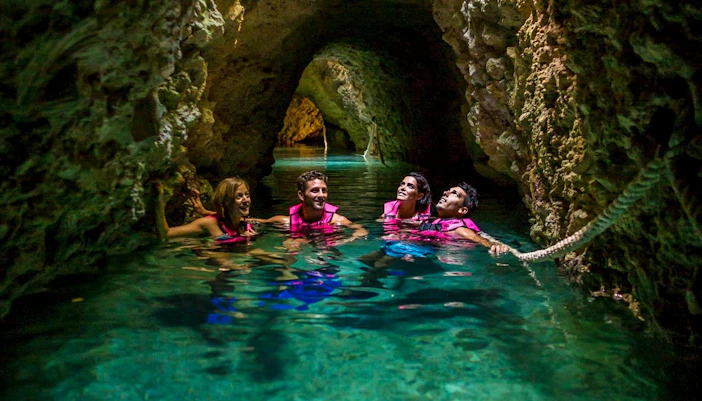
Xcaret Park stands out for how much it brings together in one place: underground rivers, tropical wildlife, Caribbean scenery, Maya heritage, and large-scale cultural performances. The experience keeps changing throughout the day, from swimming through limestone tunnels to exploring the Aviary, Mayan Village, and coastal areas.
The park was developed around the site’s natural features, with its biodiversity and archaeological setting shaping the visitor experience. That mix of nature and culture comes together most clearly in Xcaret México Espectacular, where music, dance, costumes, and historical scenes close the day.
The biggest payoff is variety. Few attractions let you move from river swims and wildlife habitats to Mexican traditions and an evening show in one visit.
Skip it if you prefer compact attractions, have only a few hours, or do not enjoy long walks, water activities, and large-scale performances.
What to see at Xcaret Park
Underground Rivers
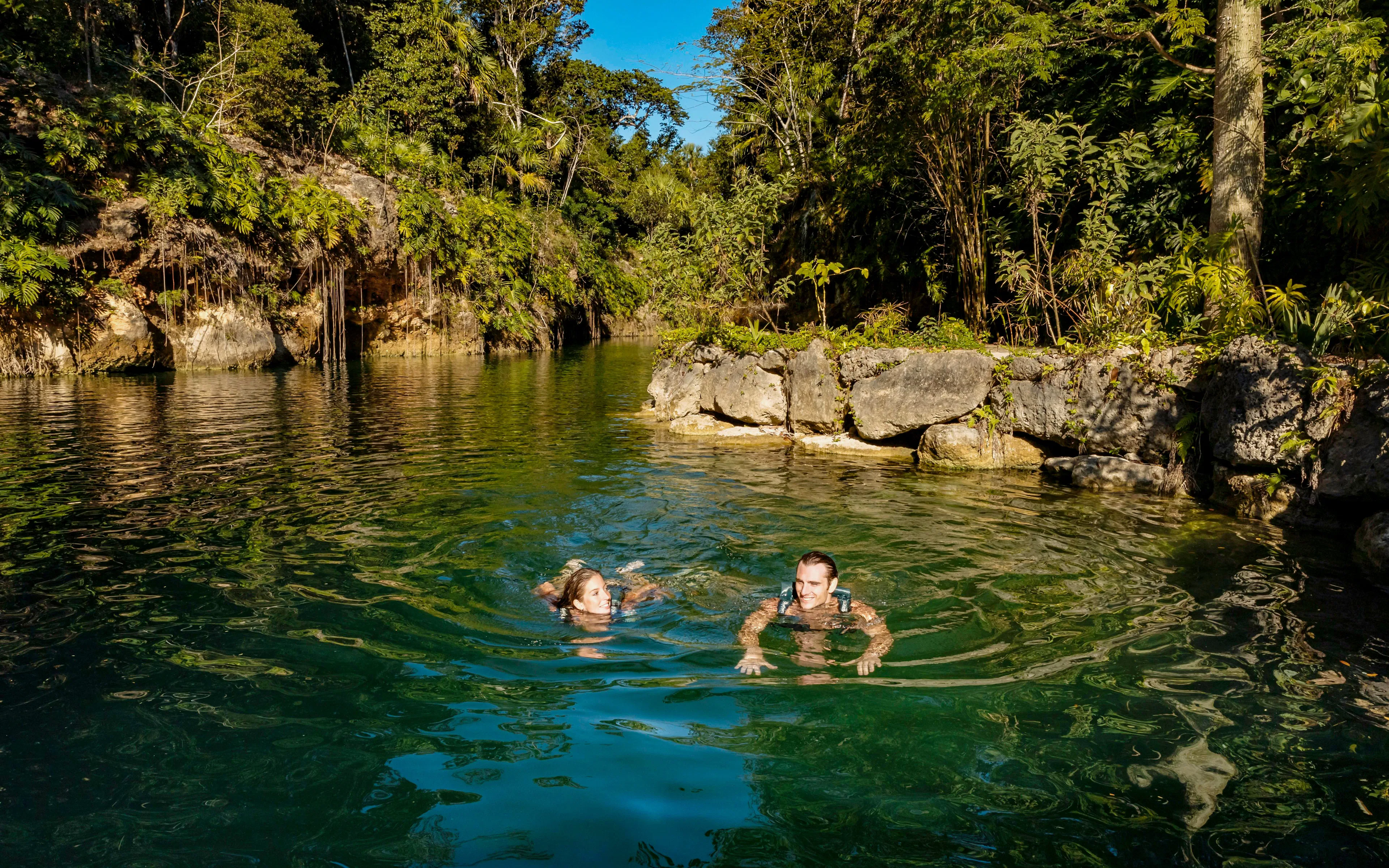
Swim through the Blue River, Pre-Hispanic River, or Manatee River as each route winds through caves, limestone tunnels, and open-air sections before reaching the Caribbean coast.
Xcaret Aviary
Walk through a large naturalistic habitat filled with macaws, toucans, flamingos, and other native birds. The elevated paths and waterfalls make this one of the park’s most immersive wildlife areas.
Butterfly Pavilion
Step into a tropical environment where native butterflies move among flowering plants, waterfalls, and shaded pathways. Visitors can also observe different stages of the butterfly life cycle.
Mayan Village
Explore traditional-style homes, artisan workshops, ceremonies, and cultural spaces inspired by Maya communities. The area offers a more intimate look at regional customs beyond the park’s larger performances.
Mexican Cemetery
The Bridge to Paradise cemetery features colorful tombs, symbolic architecture, and references to Mexico’s Day of the Dead traditions. Its circular layout represents the days and months of the year.
Xcaret México Espectacular
End the day at Gran Tlachco with a large-scale production featuring music, regional dances, costumes, equestrian performances, and scenes from Mexico’s history and folklore.
Coral Reef Aquarium
See tropical fish, coral ecosystems, and marine species linked to Mexico’s Caribbean coast. The aquarium offers a quieter indoor stop between the park’s longer outdoor routes.
Xcaret Beach and Inlet
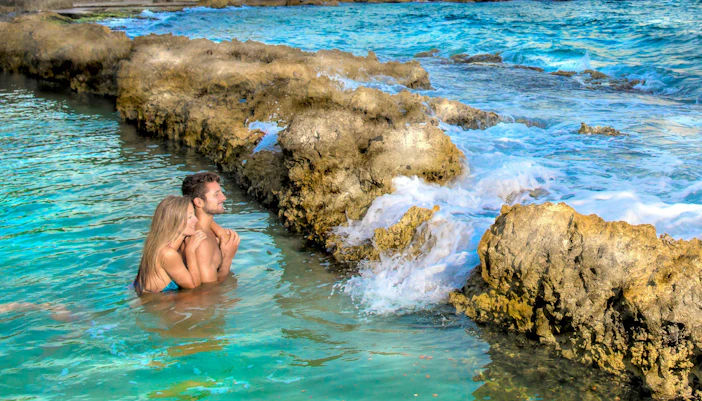
Take a break along the Caribbean shoreline, swim in calmer coastal waters, or relax near the inlet after completing the underground rivers and wildlife areas.
How to explore Xcaret Park
How much time to spend?
Set aside a full day, ideally 8–10 hours, to experience an underground river, wildlife habitats, cultural areas, lunch, and Xcaret México Espectacular. A shorter 5–6 hour visit works only if you focus on the evening attractions and skip most water activities.
Best visit order
Enter through the main gate and head first to the underground rivers while you are fresh and before the changing areas get busier. Continue to the Aviary, Butterfly Pavilion, and Coral Reef Aquarium, then stop for lunch. Spend the afternoon around Xcaret Beach, the inlet, Mayan Village, Mexican Cemetery, and Hacienda Henequenera. Finish near Gran Tlachco for the evening show.
Must-see highlights
Must-see: one underground river, Xcaret Aviary, Mayan Village, Mexican Cemetery, and Xcaret México Espectacular.
Optional: Sea Trek, Adrenalina, marine encounters, and other paid activities. These add scheduled check-in time and can make the day feel more rushed.
Worth adding nearby
Xplor Park is the strongest add-on for travelers who want ziplines, caves, and amphibious vehicles, but it needs a separate day. Xenses works better as a shorter experience, while Xel-Há suits visitors prioritizing snorkeling and natural water activities.
Guided or self-paced?
Xcaret works well as a self-paced visit because the park uses color-coded routes and provides maps and schedules. A guided option is useful mainly for travelers who want deeper context on Maya history, Mexican traditions, or the archaeological site. For most visitors, the more valuable upgrade is Xcaret Plus, which adds a buffet lunch, lockers, changing facilities, and snorkel equipment.
Brief history of Xcaret Park
- 1984: Architect Miguel Quintana Pali purchased five hectares in the Riviera Maya to build a home. While clearing the land, he discovered cenotes and underground rivers and decided to preserve and share the site instead.
- Late 1980s: Quintana Pali partnered with brothers Oscar, Marcos, and Carlos Constandse to develop the land into a park combining the region’s natural environment with Mexican history and culture.
- December 1990: Xcaret Park officially opened after roughly five years of development. Its original concept centered on the site’s rivers, cenotes, archaeological setting, wildlife, and cultural traditions.
- Today: Xcaret has expanded into a full-day eco-archaeological park and became the first attraction in what is now Grupo Xcaret’s wider network of parks, tours, and hotels.
Architecture and design of Xcaret Park
Xcaret Park does not follow one architectural style. Its design blends the Riviera Maya’s existing caves, cenotes, underground rivers, jungle, and archaeological remains with spaces inspired by different periods of Mexican history. Paths and structures are arranged around the natural terrain rather than replacing it, making the park feel like a landscape visitors move through rather than a conventional built attraction.
The clearest architectural landmark is Hacienda Henequenera, modeled on 19th-century Yucatán estates from the henequen boom. Nearby, the Chapel of Our Lady of Guadalupe contains a 12-meter-tall carved wooden figure, while the House of Whispers uses its unusual geometry to carry voices across the room.
Who designed Xcaret Park?
Architect Miguel Quintana Pali conceived Xcaret after discovering cenotes and underground rivers on land he bought in 1984. Rather than building over them, he reshaped the project into a park centered on the site’s natural features and Mexican cultural heritage.
Xcaret Park’s conservation work
Xcaret supports conservation programs focused on Mexican wildlife, environmental education, and animal welfare. Its facilities care for regional species including sea turtles, macaws, jaguars, monkeys, and marine life, while specialists work on rescue, rehabilitation, breeding, and habitat protection initiatives.
The Aviary, Butterfly Pavilion, Coral Reef Aquarium, and regional fauna areas are therefore more than visitor attractions. They also introduce guests to the ecosystems and species these programs aim to protect. Grupo Xcaret states that visitor participation helps support the care of protected species and its wider conservation work.
Frequently asked questions about Xcaret Park
Xcaret combines natural landscapes, underground rivers, wildlife habitats, archaeological remains, Mexican cultural spaces, and live performances rather than focusing mainly on mechanical rides.
No, Xcaret, Xel-Há, Xplor, and Xenses are separate Grupo Xcaret experiences, each with its own ticket, attractions, and focus.
The park was developed around existing cenotes, caves, underground rivers, jungle, and archaeological remains while also showcasing Mexican biodiversity, history, and cultural traditions.
Yes, the site contains remains linked to a former Maya settlement and trading port. Some cultural areas elsewhere in the park are modern reconstructions or interpretive spaces.
Xcaret has three underground rivers: the Blue River, Pre-Hispanic River, and Manatee River. Visitors choose one route rather than completing all three during a typical visit.
The evening show is included with standard full-day and Plus admission. Premium dining during the performance is a separate paid experience unless specifically included in your ticket.
No, general admission covers the park’s main natural and cultural attractions, while Sea Trek, Adrenalina, dolphin encounters, and selected marine activities cost extra.
Xcaret participates in conservation, breeding, rescue, rehabilitation, and environmental education programs involving native species such as macaws, sea turtles, butterflies, and regional marine life.
Yes, many wildlife, cultural, archaeological, and performance attractions do not involve swimming. Life jackets are mandatory in the underground rivers, but guests can skip water activities entirely.
Not exactly. Xcaret includes rivers, beaches, inlets, and natural pools, but it is better described as an eco-archaeological theme park combining nature, wildlife, culture, and water activities.